
 13 Aug 2026
 8 min read
Choosing between a traditional electric breast pump and a wearable model is one of the more practical decisions a pumping parent faces. Both types use electric motors to express milk, but they fit into a daily routine in very different ways. The right answer depends less on which type is “better” and more on when, where, and how often you pump. This guide breaks down the comparison by real-life routine so you can match the pump type to the way you actually live.
Quick answer: how electric breast pump options compare
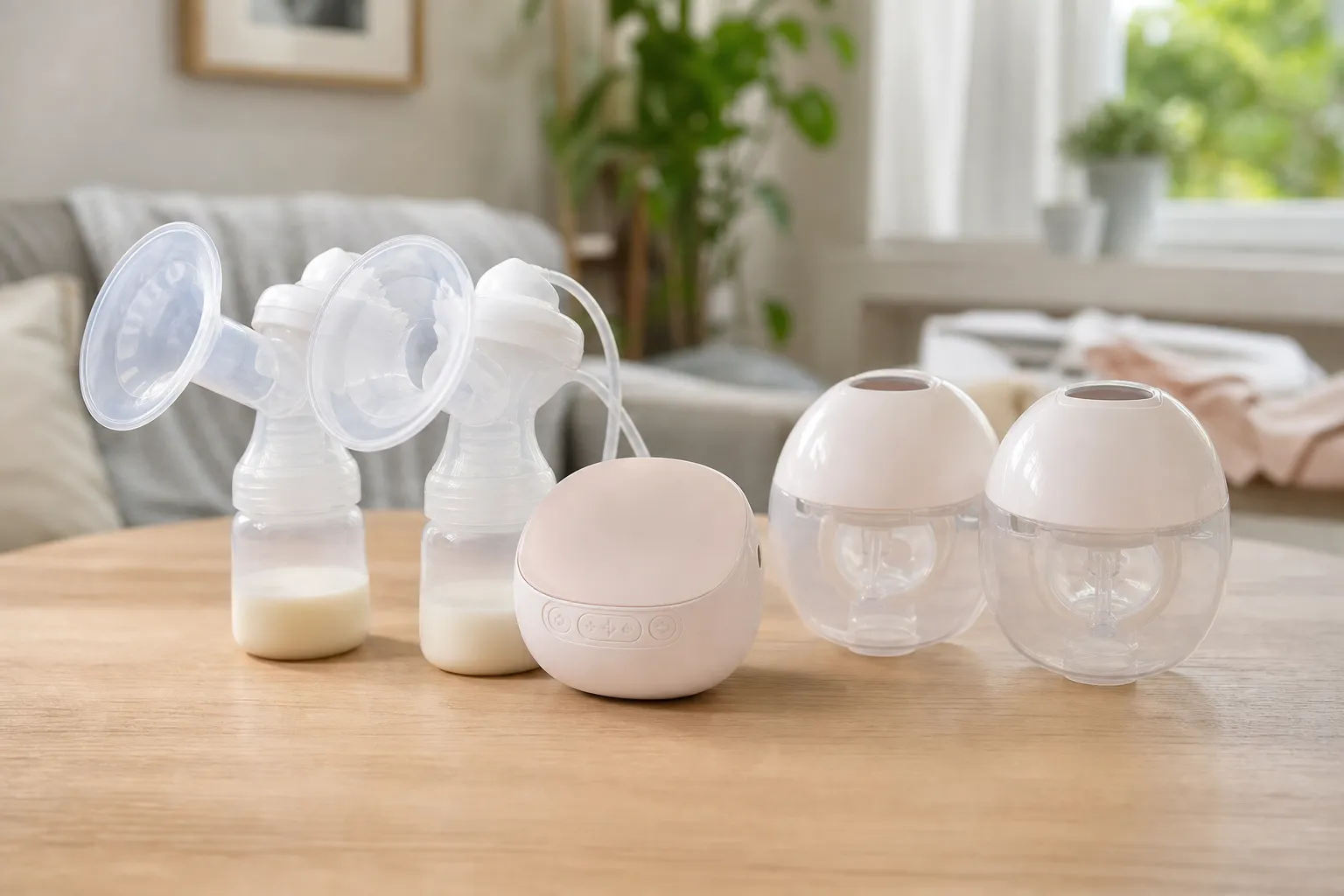
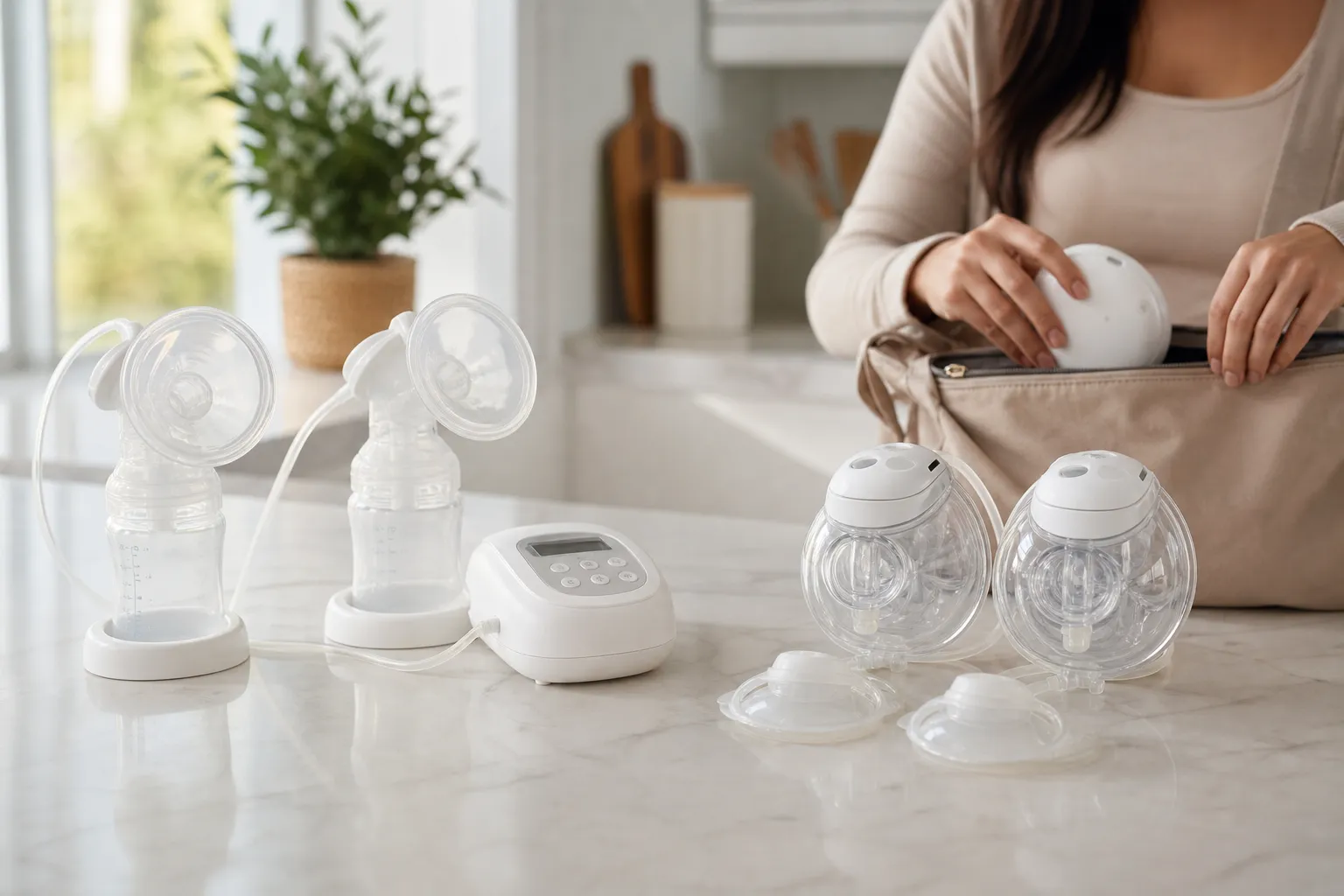
A traditional double electric breast pump connects to a wall outlet or battery pack, uses external tubing and flanges, and typically delivers strong, consistent suction. A portable electric breast pump works the same way but runs on a rechargeable battery, removing the cord constraint. Wearable breast pumps are self-contained units that sit inside a nursing bra, have no external tubing, and let you move freely while pumping.
For exclusive pumpers who need maximum output and pump eight or more times a day, a double electric breast pump with hospital-grade suction is usually the most reliable workhorse. For parents returning to an office or juggling an older child, a portable electric breast pump or a wearable breast pump can make sessions far less disruptive. For occasional pumping, a wearable or compact portable model is often enough.
None of these options is universally superior. Each involves real tradeoffs in output, convenience, cleaning, and cost.
Electric breast pump compared at a glance
| Criteria | Traditional double electric | Portable electric breast pump | Wearable breast pumps |
|---|---|---|---|
| Best fit | Exclusive pumpers, home use | Commuters, flexible schedules | On-the-go, hands-free priority |
| Ideal use case | High-frequency, high-volume pumping | Travel, office, mixed routines | Pumping while active or multitasking |
| Main strength | Consistent suction, proven output | Cord-free with familiar design | Fully hands-free, discreet under clothing |
| Key tradeoff | Requires outlet or large battery; less portable | Slightly bulkier than wearables | More parts to clean; output varies by fit |
| Cleaning burden | Moderate (standard tubing and flanges) | Moderate (same as traditional) | Higher (more small components) |
| Noise level | Audible motor | Audible motor | Quieter, but not silent |
Compare electric breast pump by the criteria that matter
Fit and use case
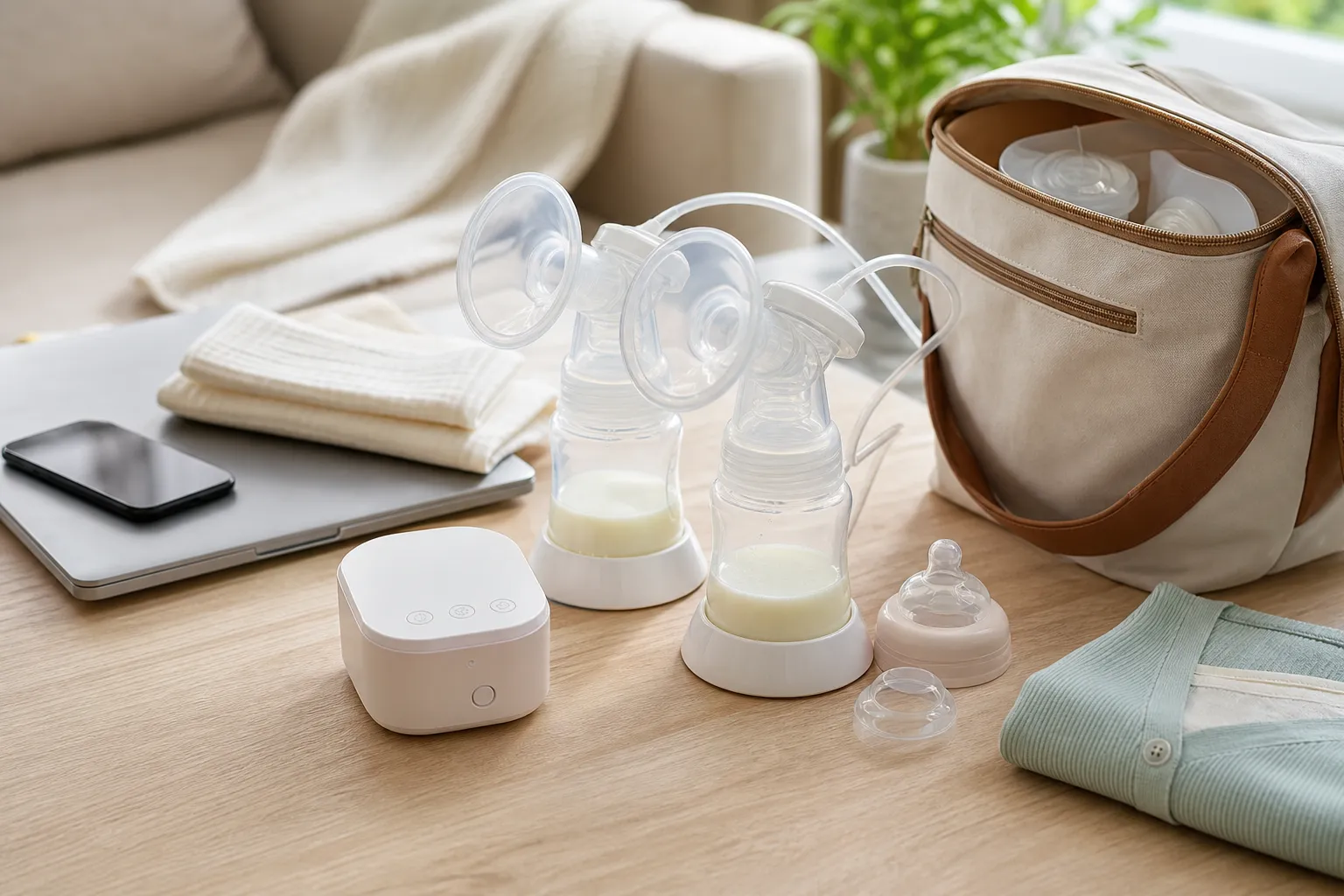
The way a pump fits your routine matters as much as how it fits your body. A traditional double electric breast pump is designed for stationary sessions. You sit down, attach the flanges, and pump for a set amount of time. That structure works well for exclusive pumpers who build their day around pumping sessions, or for parents who do most of their pumping at home in the early weeks.
A portable electric breast pump uses the same basic design — flanges, tubing, collection bottles — but runs on a built-in battery. That single change opens up a lot of flexibility. You can pump in a car, in a workplace pumping room without hunting for an outlet, or in any room of your house without being tethered. For parents returning to work, a portable electric breast pump is often the practical middle ground between the power of a traditional pump and the freedom of a wearable.
Wearable breast pumps are built for a different kind of use. They sit inside your bra, collect milk in an internal cup, and let you move around while pumping. If you are chasing a toddler, sitting in back-to-back meetings, or doing light tasks around the house, wearable breast pumps remove the need to stop and sit. The tradeoff is that fit matters enormously — a poor flange fit reduces output — and the smaller motor may not match the suction of a traditional unit.
For occasional pumping, such as building a small freezer stash or covering one feeding while away, either a portable electric breast pump or a wearable can work well without the investment of a full hospital-grade setup.
Value and tradeoffs
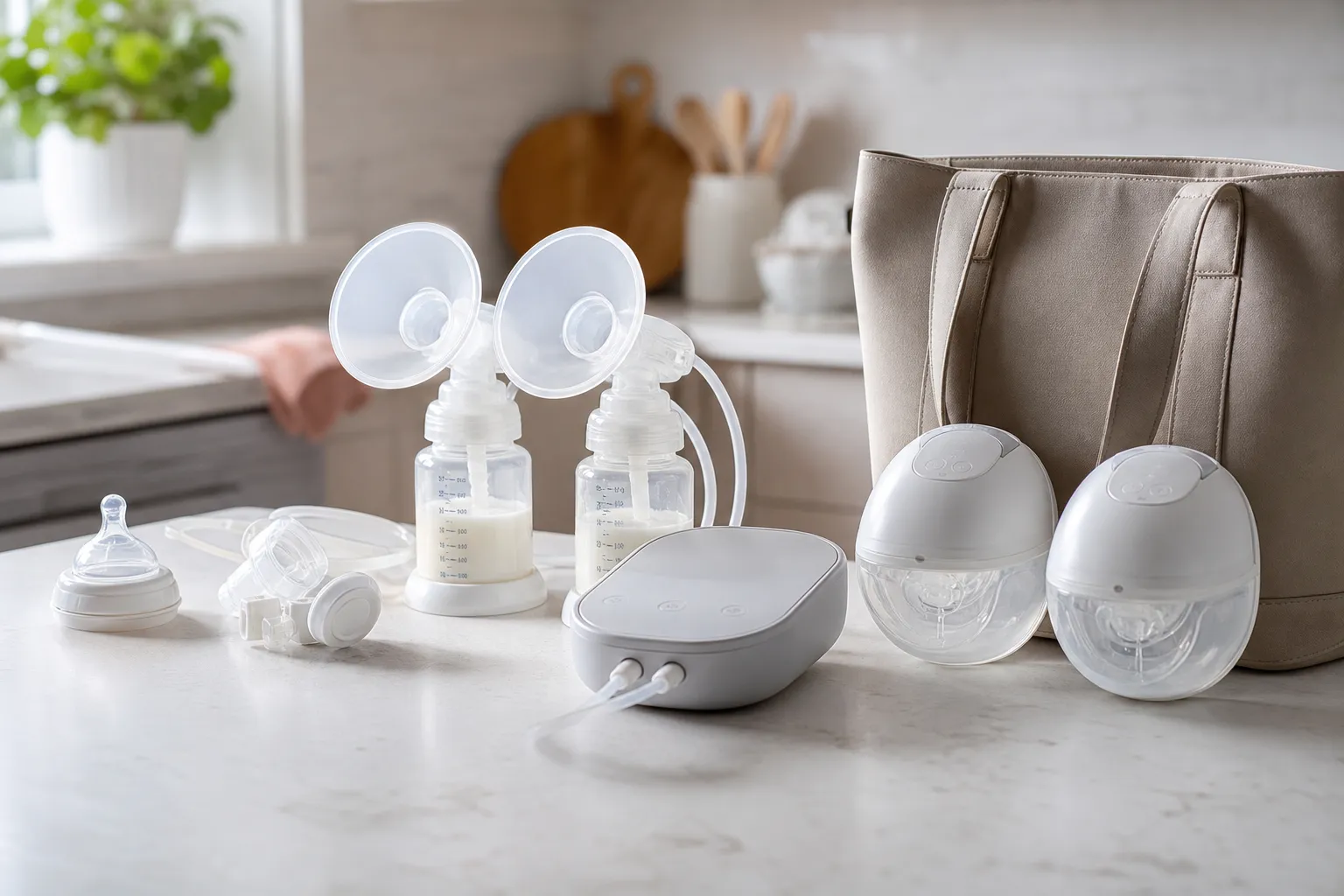
Traditional double electric breast pumps tend to have a lower upfront cost for a reliable, well-tested design. Many are covered by insurance in the US, which reduces the out-of-pocket consideration significantly. The main ongoing cost is replacement parts — flanges, valves, and tubing wear out over time.
Portable electric breast pumps often sit in a similar or slightly higher price range than traditional models, depending on the brand and features. You are paying for the battery and the compact design. If you pump away from home regularly, that convenience has real value.
Wearable breast pumps generally carry a higher price point than basic traditional models, though the range is wide. You are paying for the engineering that fits everything — motor, battery, collection cups — into a wearable form. For parents who pump frequently on the go, that investment can be worth it. For parents who pump occasionally or primarily at home, the cost may outweigh the benefit.
One often-overlooked tradeoff is cleaning time. Wearable breast pumps have more small parts — valves, membranes, collection cups, and duckbill valves — that all need to be cleaned after each session. If you are pumping six or eight times a day, that cleaning load adds up. A traditional or portable electric breast pump typically has fewer components and a more straightforward cleaning routine.
Limitations and deal-breakers
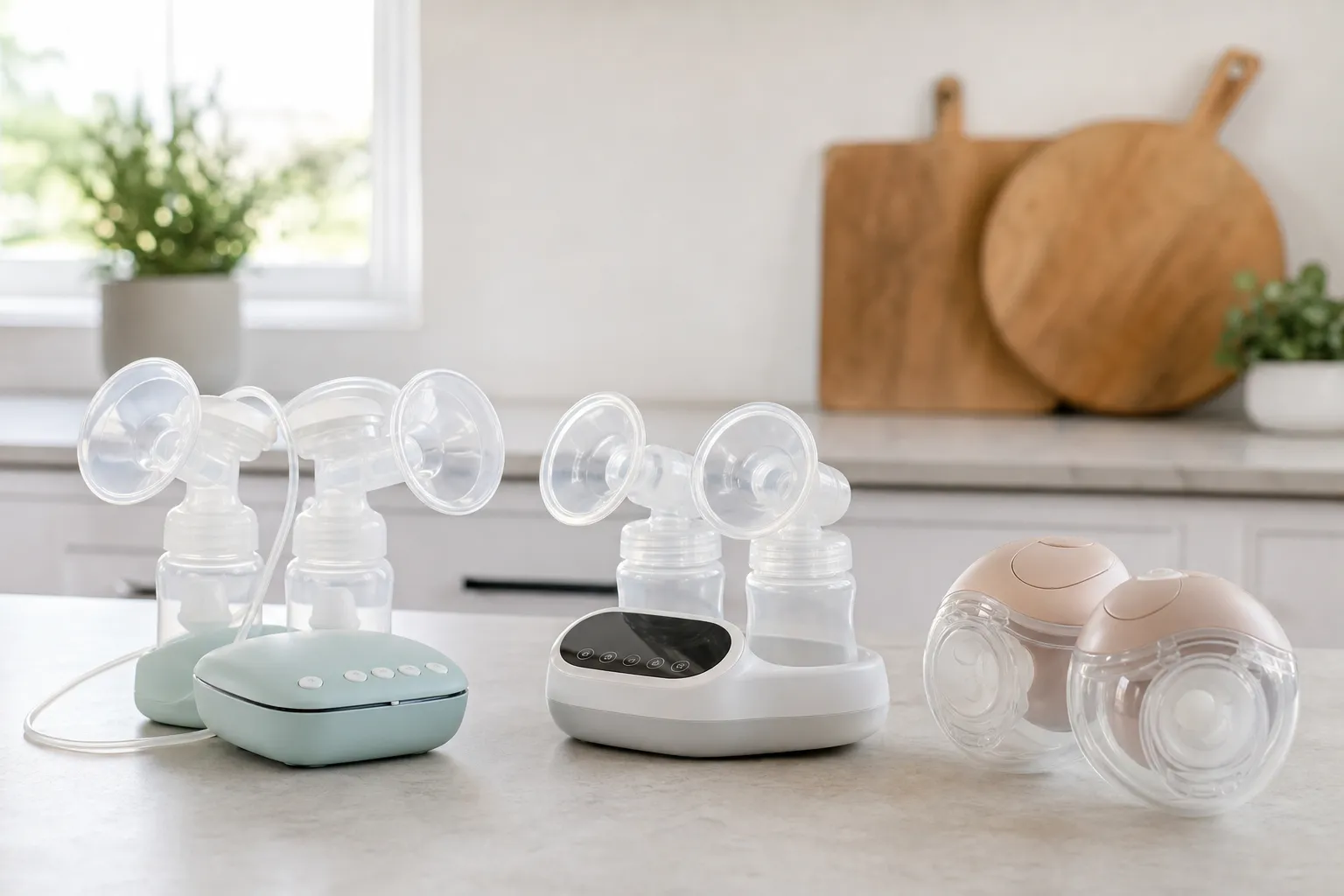
A traditional double electric breast pump becomes a deal-breaker when you need to pump somewhere without a reliable power source, or when you simply cannot sit still for a session. The tubing and external setup also make it impractical to use discreetly in shared spaces.
A portable electric breast pump solves the outlet problem but does not solve the hands-free problem. You still need to hold or support the flanges and bottles during a session, which limits what you can do at the same time.
Wearable breast pumps have their own deal-breakers. Output can be lower than a traditional electric breast pump, particularly for parents who need to maintain or build supply. Fit is critical — if the wearable flange does not fit your anatomy well, you may experience discomfort or reduced output. The higher cleaning burden is also a real consideration for high-frequency pumpers. And because the motor is smaller and self-contained, some parents find wearable breast pumps less effective for draining the breast fully.
For exclusive pumpers, relying solely on wearable breast pumps carries some risk if supply is a concern. Many exclusive pumpers use a combination: a traditional or portable electric breast pump for most sessions and a wearable for sessions when they genuinely cannot stop moving.
Decision rule for electric breast pump
Use this framework to match pump type to your routine:
If you pump exclusively or more than six times a day, prioritize a double electric breast pump with strong, consistent suction. Output and reliability matter more than portability at that frequency.
If you are returning to work or pumping in multiple locations, a portable electric breast pump gives you the familiar performance of a traditional unit without the cord. It is a strong default for mixed routines.
If you need to pump while actively doing something else — caring for older kids, commuting, working through meetings — wearable breast pumps are the most practical option for those specific sessions. Consider using them alongside a more powerful pump for sessions when you can sit down.
If you pump occasionally, a compact portable electric breast pump or a wearable is usually enough. You do not need a high-powered traditional unit for infrequent use.
If you are unsure, many parents find that a portable electric breast pump covers the widest range of situations without the learning curve or cleaning complexity of a wearable. You can always add a wearable later once you know your routine.
FAQ about electric breast pump
What is the best electric breast pump?
The best electric breast pump depends on your pumping frequency and lifestyle. Exclusive pumpers generally do better with a double electric breast pump, while parents who pump on the go often prefer a portable or wearable option.
Is it worth buying an electric breast pump?
Yes, for most pumping parents an electric breast pump is worth the investment. It is faster and less tiring than manual pumping, especially if you pump more than once or twice a day.
Which brand electric breast pump is best?
No single brand suits every parent. Look for a pump with adjustable suction, good flange fit options, and a cleaning routine that matches how often you pump — whether that is a double electric, portable electric, or wearable breast pump.
What is the 30/30/30 rule for breast pumping?
The 30/30/30 rule generally refers to pumping for 30 minutes, storing milk within 30 minutes, and refrigerating it within 30 minutes. It is a rough guideline, not a clinical standard — always follow current safe milk storage recommendations.
What is the top-rated breast pump type for daily use?
For daily use, a double electric breast pump or a portable electric breast pump tends to be the most consistently effective. Wearable breast pumps are excellent for flexibility but work best as a complement to a stronger pump for high-frequency sessions.
What should readers know first about electric breast pump options?
Flange fit matters more than pump type. A well-fitted flange on a mid-range electric breast pump will outperform a poorly fitted flange on a premium wearable breast pump.
How do you choose the right electric breast pump approach?
Start with your pumping frequency and location. High-frequency pumpers at home should prioritize suction strength; parents pumping at work or on the go should prioritize portability, whether through a portable electric breast pump or wearable breast pumps.
What mistakes should you avoid with electric breast pump use?
Avoid using the wrong flange size, skipping regular part replacement, and assuming a wearable breast pump will match the output of a double electric breast pump. All three mistakes can reduce supply over time.
Recommended next steps
The clearest next step is to map your actual pumping schedule before you buy. Write down where you will pump, how many times a day, and whether you will have time to sit down for each session. That exercise will usually point you toward one type more than the others.
If you are building a pumping kit from scratch, explore the wearable pump and accessories options at Olivia by Lolafo to see what fits your routine. If you are still working through the basics of how pumping works day to day, it is worth reading up on milk storage solutions alongside your pump choice — the two decisions are closely connected. And if you are deciding between a portable electric breast pump and wearable breast pumps specifically, consider whether hands-free mobility or raw output matters more for your most common pumping scenario. That single question often makes the decision straightforward.
Meredith Calloway spent four years as a lactation support writer and product researcher before joining the Olivia by Lolafo editorial team, where she covers pumping gear, milk storage, and the unglamorous logistics of feeding a baby in the real world. She approaches every review and how-to the way she’d explain it to a friend texting from a parking lot — with specific numbers, honest trade-offs, and zero filler. Her work draws on published lactation research, hands-on product testing, and direct input from pumping communities including r/ExclusivelyPumping and IBCLC-reviewed sources. If a suction spec matters or a flange fit issue is being undersold by a brand, she’ll say so.
Leave a Reply