
 23 Aug 2026
 5 min read
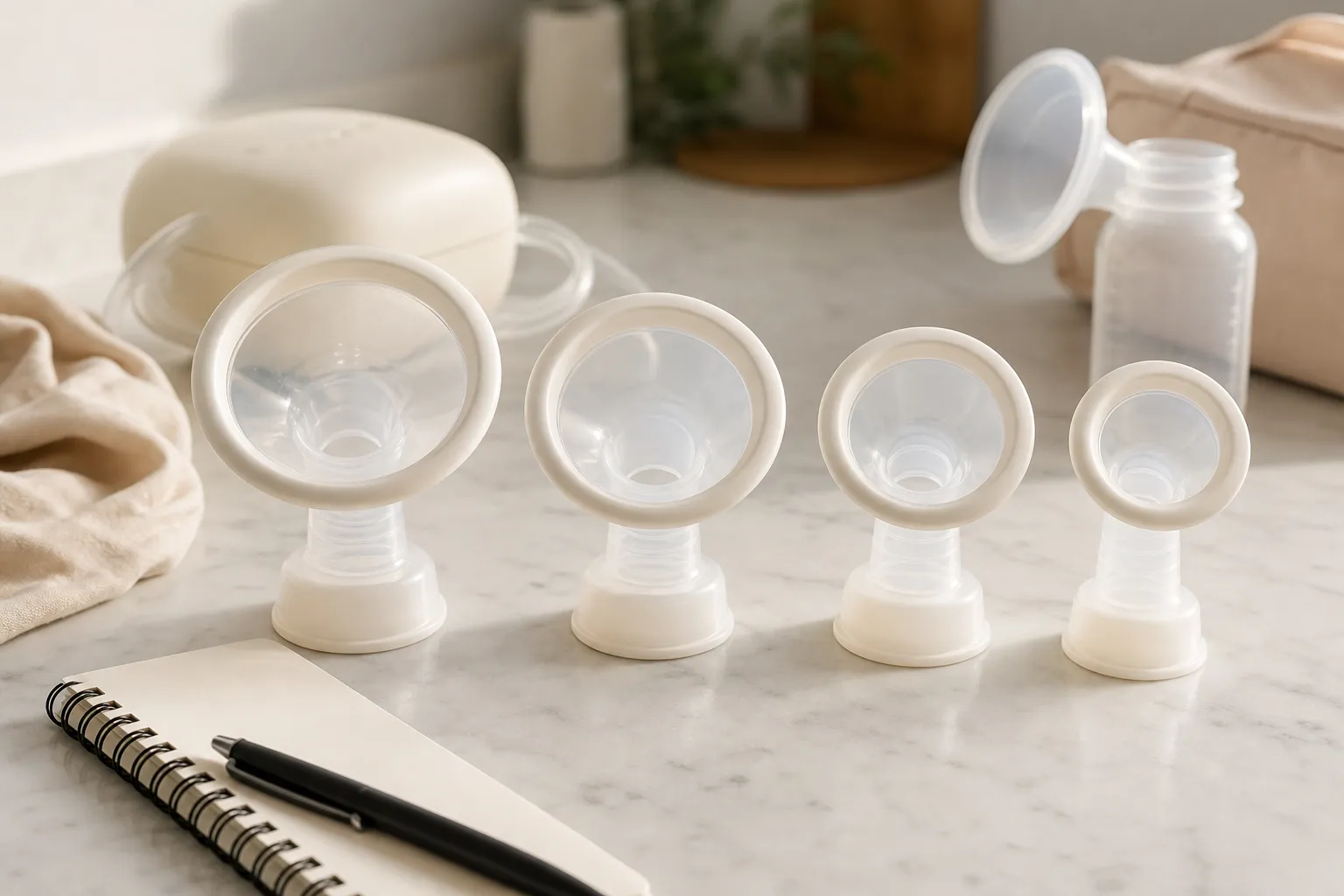
Flange sizes for breast pumps sound technical, but the idea behind them is simple: it’s the part of your pump that touches your breast, and getting the size right affects comfort and how well milk flows during a session. If you’ve read pumping forums or product manuals and felt lost in the terminology, this glossary walks through the key terms in plain language so you can approach measuring with more confidence.
What flange sizes for breast pumps means
A flange (also called a breast shield) is the funnel-shaped piece that fits over your nipple and areola during pumping. Flange sizes for breast pumps refer to the diameter, in millimeters, of the tunnel where your nipple sits during suction. This measurement is usually taken at the narrowest part of the tunnel, not the wide opening that touches your skin.
When people talk about breast pump flange size, they’re describing how well that tunnel diameter matches your own nipple diameter. Too small, and the tunnel rubs and pinches. Too large, and too much areola tissue gets pulled in, which can cause discomfort or reduce how effectively milk is expressed. Every pump brand tends to ship a standard size in the box, but that size doesn’t fit everyone, which is why breast pumping flange size is treated as something to check rather than assume.
The term flange size breast pump is often used interchangeably with breast shield size or breast pump flange size — they all point to the same measurement. Manufacturers usually list flange sizes in millimeters, and most brands offer a range so parents can size up or down from the default.
Related concepts and examples
Understanding flange sizing gets easier once a few related terms are defined:
- Insert: A smaller silicone or plastic piece that fits inside a larger flange to reduce the effective tunnel diameter without needing to buy a whole new flange. Inserts are a common way to fine-tune fit between standard sizes.
- Tunnel width: The internal diameter of the flange where the nipple moves during suction. This is the actual number referenced when discussing flange sizes for breast pumps, as opposed to the outer funnel width.
- Elastic nipples: Nipple tissue that stretches or elongates noticeably during pumping. Because elasticity varies from person to person, two people with the same resting nipple diameter may still need different flange sizes once movement during a pumping session is factored in.
- Fit cues: Practical signs that a flange size is working, such as the nipple moving freely without rubbing the tunnel walls, minimal areola pulled into the tunnel, and no pain during a session.
Plain-English example
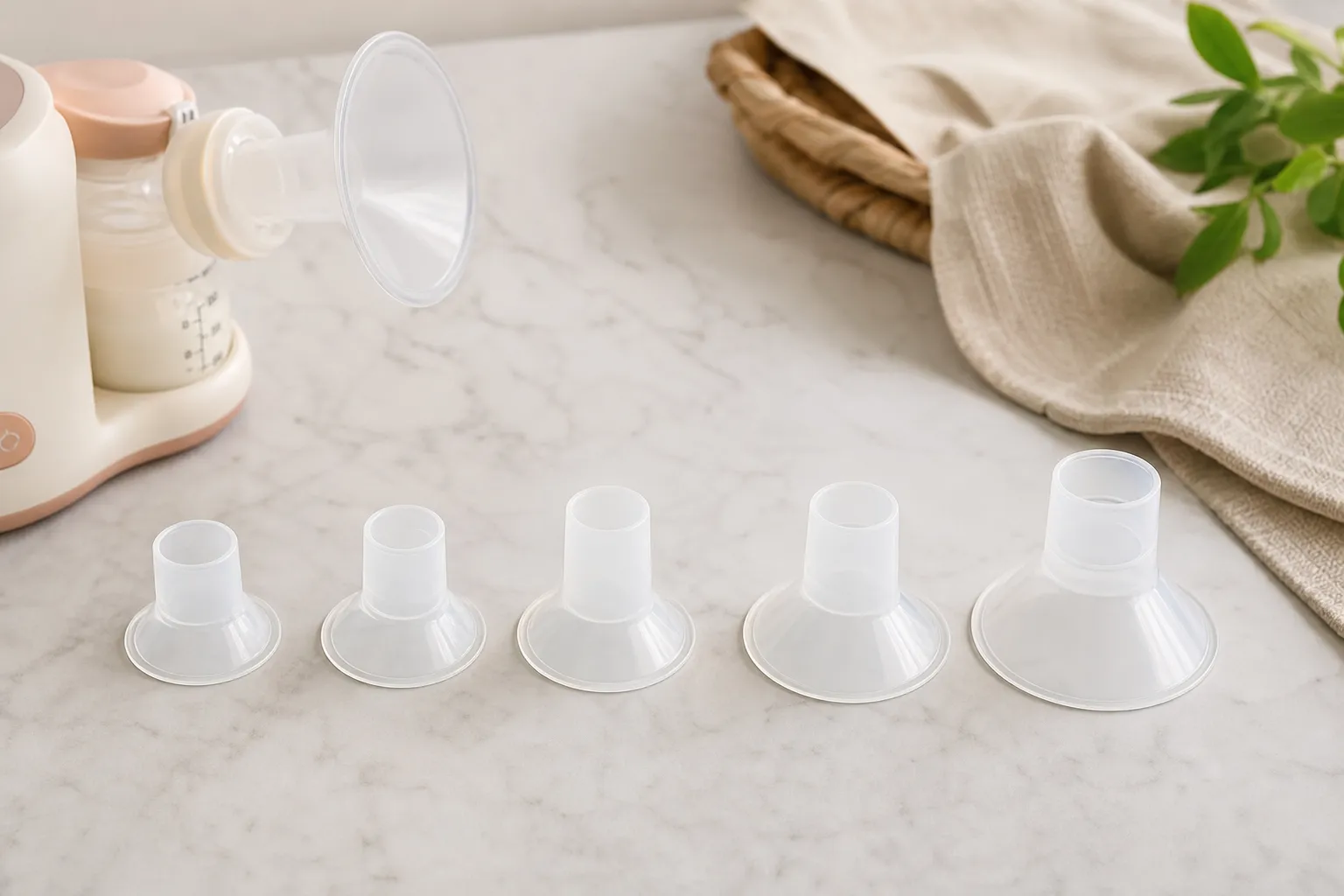
Imagine a nipple that measures 15mm at rest. A flange with a 15mm tunnel might feel snug because the nipple naturally elongates during pumping. In that case, a 17mm flange size, or a 16mm insert added to a larger flange, may fit more comfortably once movement is accounted for. This is why measuring at rest is only a starting point, not the final answer.
How it connects to the broader topic
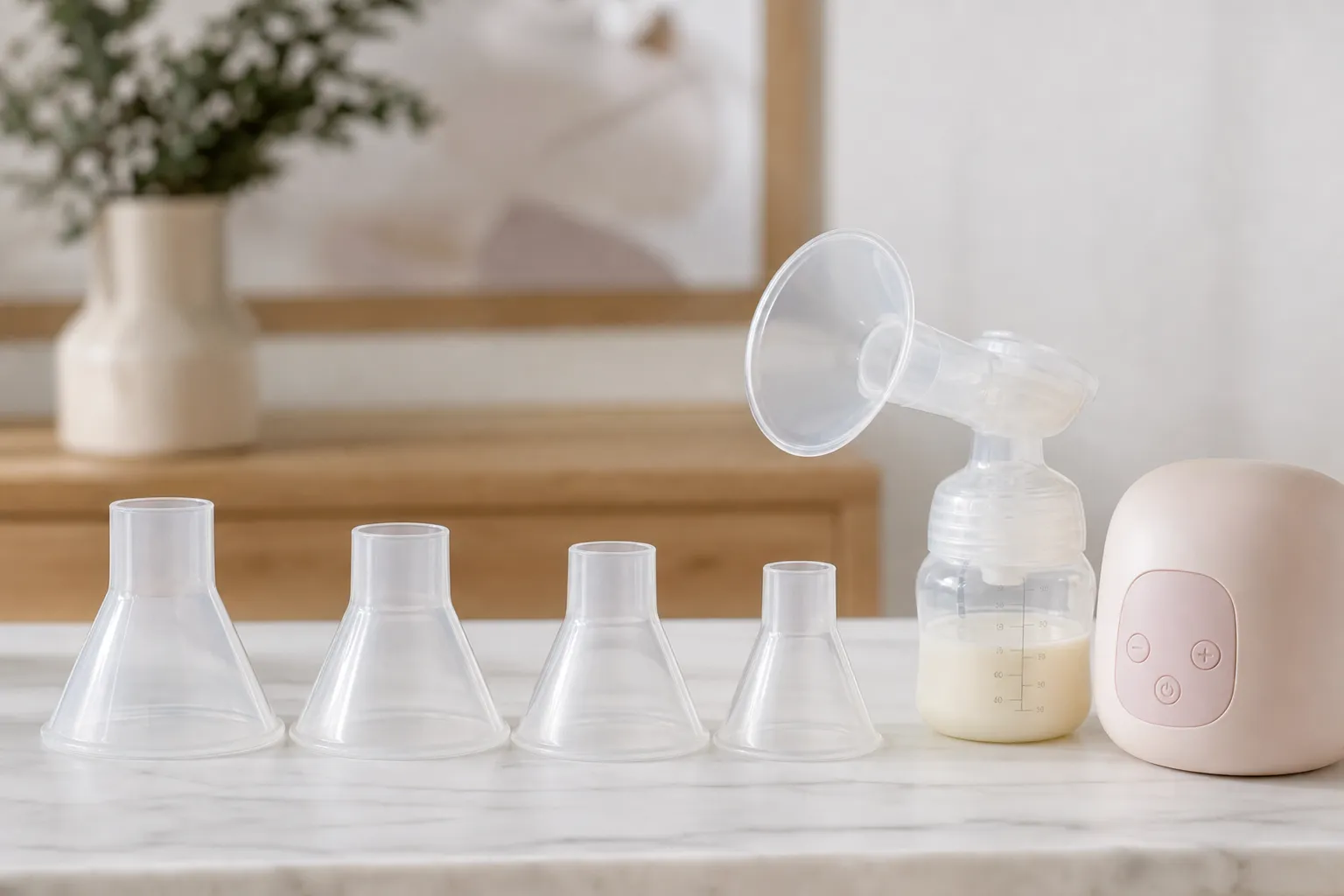
Breast pump flange size doesn’t exist in isolation. It connects to suction settings, session comfort, and how consistently milk flows during a pump. A poorly matched flange size breast pump setup can make even a well-functioning pump feel inefficient or uncomfortable, which is why sizing is usually one of the first things reviewed when someone is troubleshooting their pumping routine. If you’re new to expressing milk, it can help to pair flange sizing knowledge with a broader look at how wearable breast pumps are designed, since fit and pump design work together.
FAQ about flange sizes for breast pumps
How do I know my breast pump flange size?
Measure your nipple diameter (not including areola) in millimeters while relaxed, then compare that number to the manufacturer’s sizing chart. Many parents size up slightly to account for elongation during suction.
Do you get less milk if the flange is too big?
A flange that’s too large can pull in excess areola tissue, which may cause discomfort and uneven suction, potentially affecting how efficiently milk is expressed during a session. Fit issues in either direction are worth addressing.
What flange size is most common?
Standard sizes bundled with most pumps tend to fall in the 24mm to 28mm range, but this varies by brand and doesn’t reflect what fits any individual person. Many parents end up needing a different size than the one included in the box.
Is 17mm a common flange size?
Yes, 17mm is a widely offered size among brands that sell a range of flange sizes for breast pumps, often used by parents whose measured nipple diameter falls on the smaller end of the spectrum.
What should readers know first about flange sizes for breast pumps?
The size printed on your pump’s default flange is not guaranteed to fit you; sizing is personal and based on your own nipple diameter and how it behaves during suction.
How do you choose the right flange sizes for breast pumps approach?
Start by measuring at rest, then test the closest available size during an actual pumping session and watch for fit cues like pain-free movement and minimal areola pulled into the tunnel.
What mistakes should you avoid with flange sizes for breast pumps?
Common mistakes include sizing based on bra cup size, ignoring discomfort as normal, and not rechecking fit over time since nipple size can shift during a breastfeeding journey.
Is flange sizes for breast pumps worth it for daily use?
Getting flange size right is worth the effort for anyone pumping regularly, since a comfortable, well-fitted flange makes daily sessions easier to manage and less likely to cause soreness.
Recommended next steps
Once you understand the terminology, the next practical step is measuring your own nipple diameter and comparing it against the sizing options available for your pump. If you’re deciding between pump styles as part of this process, it may help to browse milk storage and pumping accessories alongside flange options, since fit and accessories often get evaluated together. For a broader overview of getting started with pumping, the Olivia by Lolafo homepage outlines the range of essentials available for nursing parents building out their pumping routine.
Meredith Calloway spent four years as a lactation support writer and product researcher before joining the Olivia by Lolafo editorial team, where she covers pumping gear, milk storage, and the unglamorous logistics of feeding a baby in the real world. She approaches every review and how-to the way she’d explain it to a friend texting from a parking lot — with specific numbers, honest trade-offs, and zero filler. Her work draws on published lactation research, hands-on product testing, and direct input from pumping communities including r/ExclusivelyPumping and IBCLC-reviewed sources. If a suction spec matters or a flange fit issue is being undersold by a brand, she’ll say so.
Leave a Reply