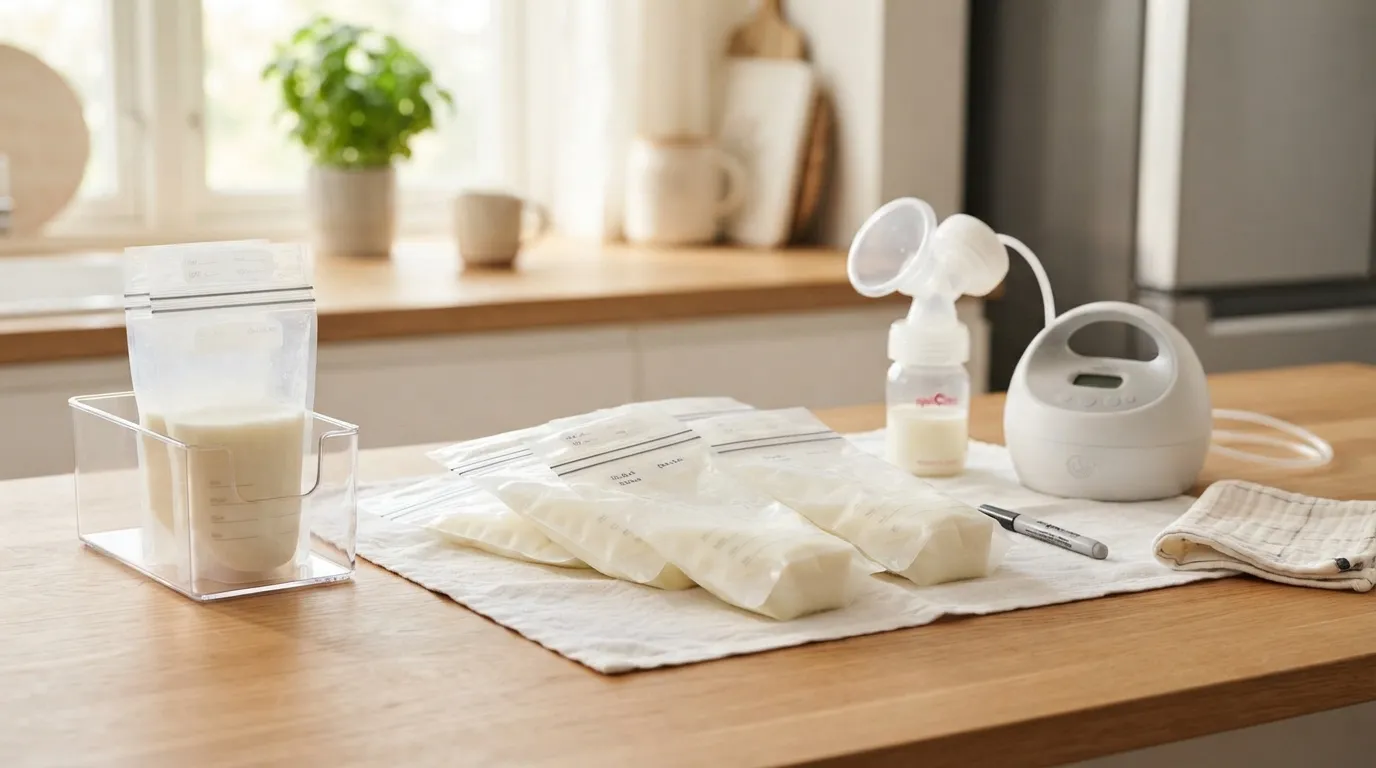

 7 Sep 2026
 9 min read
Breast milk storage bags should make pumping and feeding simpler—not create another source of stress. A split seam, weak closure, or messy pour can mean losing expressed milk and cleaning up a freezer shelf. The right choice depends on how you pump, freeze, thaw, label, and serve milk.
Quick answer: how to choose breast milk storage bags
When comparing breast milk storage bags, start with the features most likely to prevent spills:
- A secure, easy-to-check seal
- Strong seams that remain intact when the milk freezes
- A shape that suits your freezer and routine
- A controlled pour area or spout
- Enough labeling space for dates and quantities
- Material and handling instructions that match your storage method
The best breast milk storage bag is not automatically the thickest, largest, or most expensive option. It is the one that fits your daily workflow and reduces opportunities for leaking.
Think about the full process. You may fill the bag while tired, move it to the refrigerator, freeze it flat, stack it with other breast milk bags, thaw it, and pour it into a bottle. A bag that works well at one stage may be awkward at another.
For example, lay-flat milk bags storage can save freezer space and make older bags easier to identify. Stand-up bags may be simpler to fill and pour, but they can take more room or tip over if they are not supported. Your choice should reflect the way you actually store and use milk.
If you are also comparing pumping equipment, you can browse the Olivia by Lolafo breastfeeding essentials to keep your storage setup aligned with your pumping routine.
What to look for in breast milk storage bags
Fit for your real use case
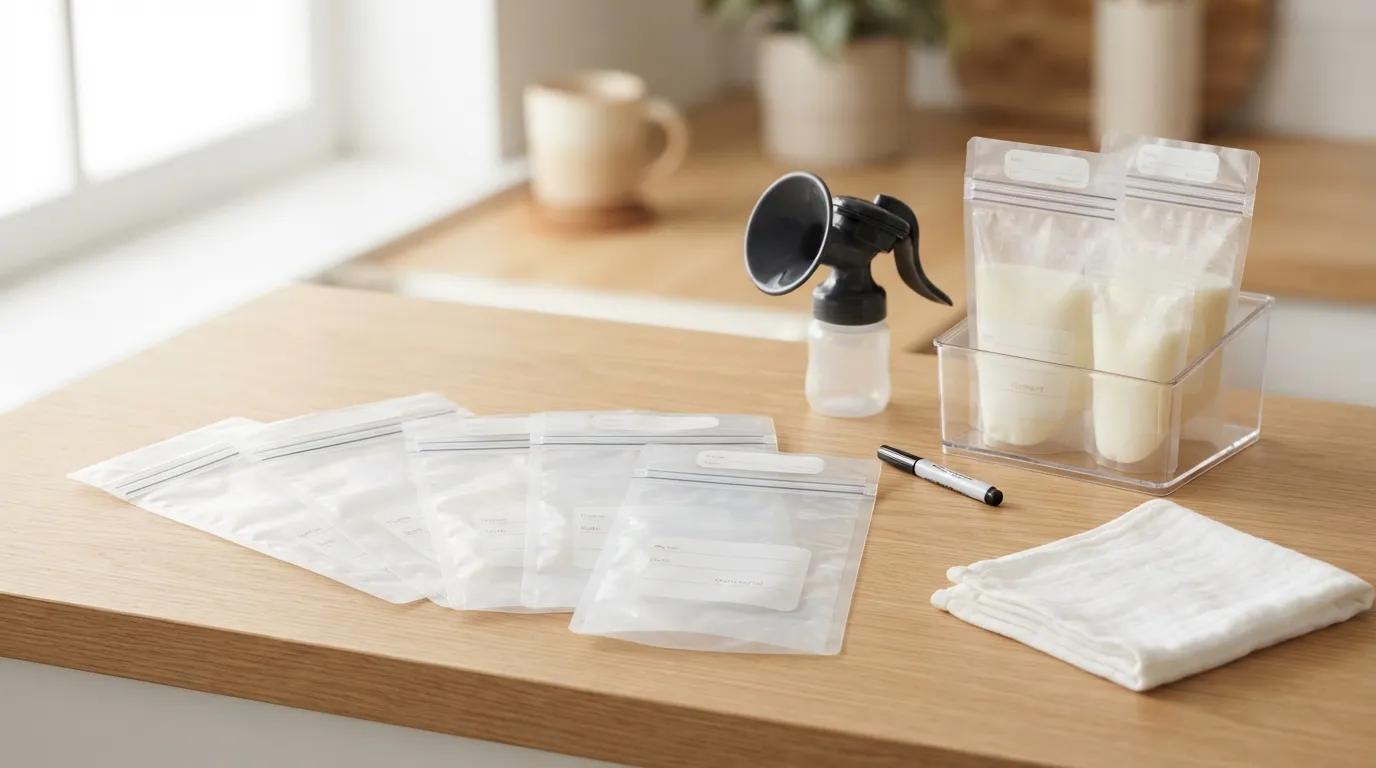
Start with how often you pump and where the bags will be used.
If you pump at work or while traveling, look for breast milk storage bags that are simple to label, close securely, and pack without taking unnecessary space. If you mostly pump at home, freezer organization and easy pouring may matter more than compact transport.
Ask yourself:
- Will the bag usually be refrigerated before freezing?
- Do you freeze milk flat or upright?
- Will someone else prepare bottles?
- Do you store small portions, larger portions, or a mixture?
- Do you need to identify milk quickly in a crowded freezer?
- Will you pour directly from the bag or transfer it first?
A breast milk storage bag with a broad labeling area can help when you need to record the pumping date, quantity, or other information. Clear, readable labels are especially useful when bags are stacked flat and the contents are not immediately obvious.
Consider the opening, too. A bag that is difficult to hold open can be frustrating when filling it from a pump bottle. If the top collapses or the bag tips easily, milk can end up on the counter instead of inside the container.
There is also a difference between storage fit and serving fit. A flat bag may freeze efficiently but require more care during thawing and pouring. A stand-up format may be easier to handle at the refrigerator, although it can be less convenient for tight freezer organization.
Choose the format that removes the most annoying step from your routine.
Value, price, and total cost
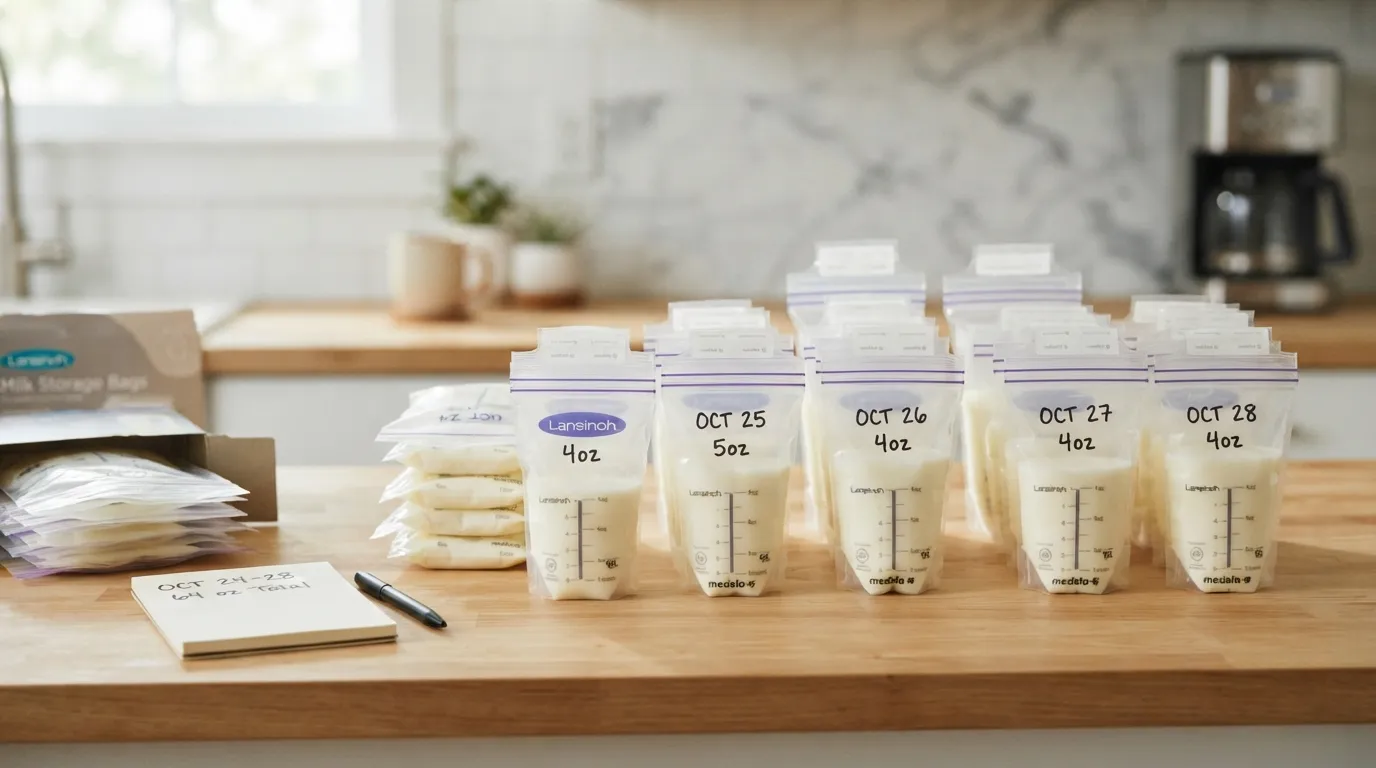
Price matters, but the lowest price per bag is not always the lowest overall cost. A leak can waste expressed milk, create extra cleaning, and make you replace bags sooner than expected.
When assessing value, consider:
- The number of bags you use each week
- Whether you freeze individual portions or larger amounts
- How much labeling and organizing you need to do
- The likelihood of spills during filling or pouring
- Whether the bags work with your preferred pump and bottles
- How easily you can inspect the seal and seams
A premium feature is only valuable if it solves a real problem. For example, a large writing panel may be useful for a shared caregiving routine but unnecessary if you use one bag at a time. A stand-up base may be worthwhile if you regularly thaw and pour from the refrigerator, while a lay-flat design may be a better fit for limited freezer space.
Avoid choosing solely by capacity. Filling a bag too close to its maximum can leave less room for expansion during freezing and make the closure harder to manage. Follow the bag manufacturer’s fill and storage instructions rather than treating the printed capacity as a target.
You can also reduce waste by choosing portion sizes that match your normal feeding routine. Smaller portions may offer more flexibility, while larger portions may reduce the number of bags used. The right balance depends on your household and how much milk is typically needed at one time.
Features that actually change the experience
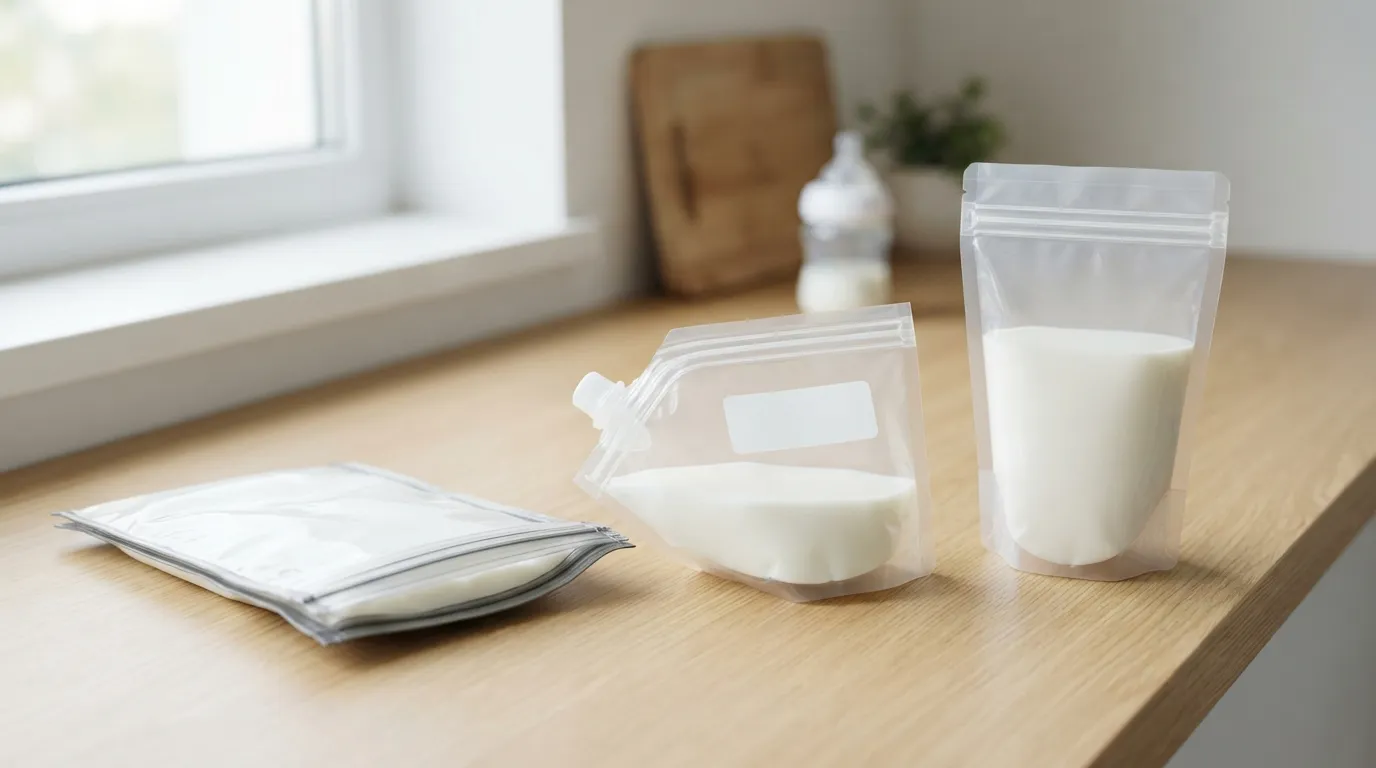
Some details on breast milk bags directly affect leakage and handling.
Seal strength
A reliable closure should be easy to close fully and easy to inspect. Double-check that the seal is aligned across the entire opening before placing the bag in a refrigerator or freezer.
A closure that requires excessive force can be inconvenient, but a closure that feels loose may create uncertainty. If the bag has a tamper-evident or tear-off area, understand how it is intended to work before filling it.
Seam construction
The seams are potential failure points, especially when the bag is moved, stacked, or frozen. Look for clean, consistent seams without visible gaps, wrinkles, or weak-looking corners.
Do not lift a filled bag by the top closure alone. Support the base when moving it, particularly after thawing, when the contents may put pressure on the sides.
Lay-flat or stand-up shape
Lay-flat breast milk storage bags can be easier to stack and arrange in a freezer. They may also thaw in a relatively even layer, depending on how they are positioned.
Stand-up bags are often easier to fill and pour because the base provides support. However, they may need more vertical space and can be less efficient when you are organizing many bags together.
Neither format is universally better. Choose lay-flat if freezer organization is your main concern; choose stand-up if filling and pouring stability are more important.
Pour spout behavior
A pour spout can reduce drips, but only if it is easy to open and directs milk predictably. Check whether the spout is protected during storage and whether the opening is large enough for a steady pour.
Pour slowly after thawing. A flexible bag can fold or collapse as the milk leaves, changing the direction of the stream. Holding the bag near the top while supporting the bottom can help you control it.
If you commonly lose milk during transfers, prioritize a breast milk storage bag that gives you a stable grip and a clear pouring path over decorative features.
Labeling space
A useful label area should be large enough for the information you need and positioned where it remains visible after freezing. At minimum, many families record the date and quantity, while others also add the baby’s name or pumping session.
Check whether your chosen pen or marker remains readable on the bag material. When in doubt, test the labeling area before storing a full batch.
Freezer durability
Freezing can make plastic less flexible, and frozen bags may be handled repeatedly as you rotate stock. Inspect bags for damage before use, avoid placing them where sharp edges can puncture them, and follow the manufacturer’s directions for freezer storage.
A bag that survives freezing but is awkward to thaw can still create spills. Consider the entire cold-storage cycle rather than judging durability only by the material’s appearance.
Tradeoffs and limitations to check first
Even well-designed breast milk storage bags have limitations. A thin, flexible bag may pack efficiently but require more support while filling. A rigid or structured bag may be easier to handle but use more storage space.
A strong seal does not compensate for overfilling, misalignment, or rough handling. Similarly, a pour spout cannot prevent spills if the bag is opened while frozen solid or held at an unstable angle.
Before buying, check:
- Whether the bags are intended for breast milk storage
- The stated filling and freezing instructions
- Whether they are disposable or designed for another use
- How the manufacturer advises thawing and warming
- Whether the material suits your pump and transfer method
- Whether the bag can be clearly dated and identified
If you use a wearable pump, your transfer routine may differ from someone pumping into standard bottles. Olivia by Lolafo’s wearable pumping collection may be a useful place to review equipment options, but confirm compatibility and handling instructions for each item before use.
Storage bags are not a substitute for safe handling. Wash your hands, use clean equipment, close bags promptly, and follow current guidance from a qualified healthcare professional or public health authority for storage times and temperatures.
How to make the right breast milk storage bags decision
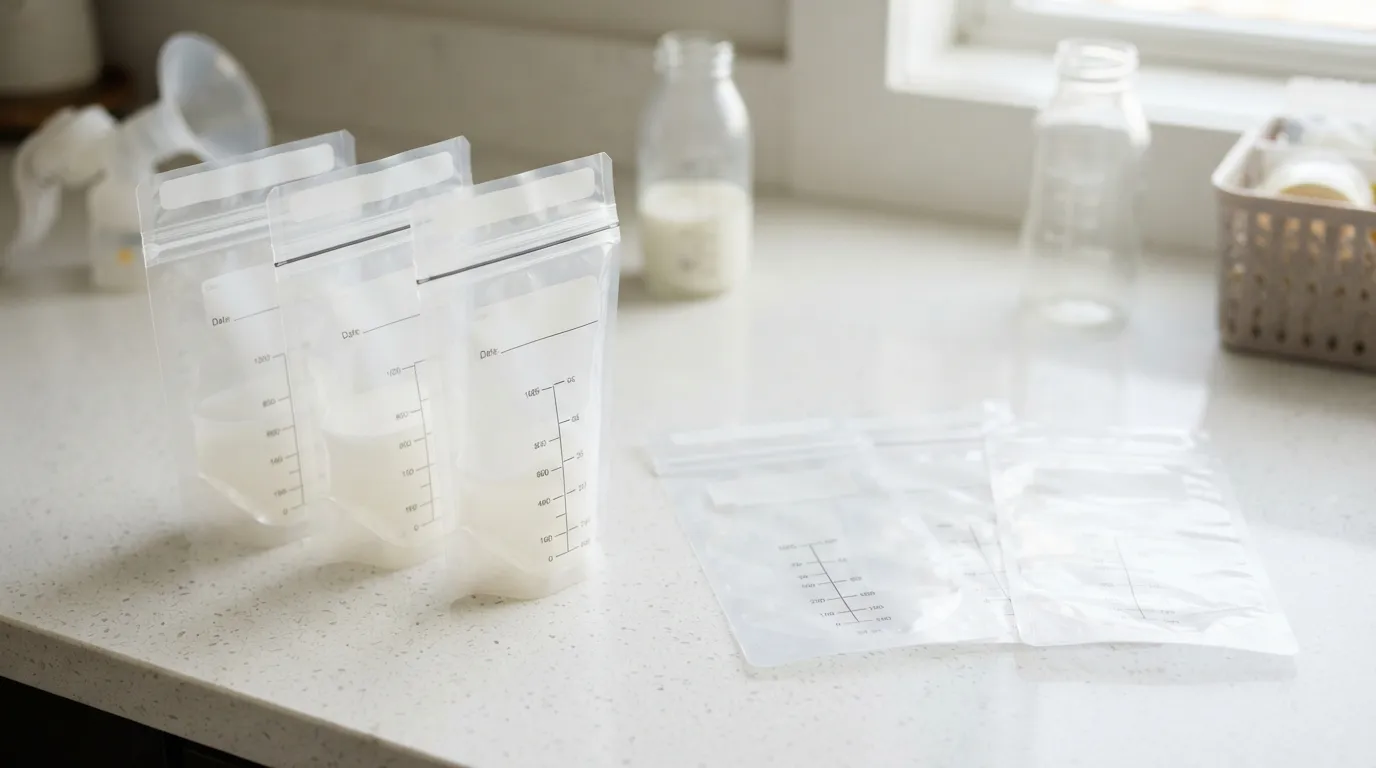
Use this decision guide:
- Choose lay-flat breast milk bags if freezer space and stacking are your top priorities.
- Choose stand-up bags if you value easier filling, handling, or pouring.
- Prioritize seam and closure inspection if leaks have been your main frustration.
- Prioritize labeling space if several people prepare feeds or you freeze frequently.
- Prioritize pour control if transferring milk often causes drips or spills.
- Choose smaller portions if flexibility matters more than minimizing bag use.
- Choose a format that matches your pump, bottles, refrigerator, and freezer.
Before committing to a large supply, test a small number through your normal routine. Fill them, close them, label them, refrigerate or freeze them as directed, and practice thawing and pouring. This can reveal problems that are difficult to spot from packaging alone.
A simple test checklist:
- Can you fill the bag without holding it awkwardly?
- Does the closure close completely without milk reaching the seal?
- Can you write the date and quantity clearly?
- Does the bag remain stable in your chosen freezer position?
- Can you move it without pulling on the closure?
- Does thawed milk pour where you expect it to go?
If your main concern is losing ounces to split seams, inspect the seams and support the bag from underneath. If sloppy pours are the recurring problem, focus on the opening, spout, grip, and thawing method. If your freezer is difficult to organize, shape and labeling may matter more than extra capacity.
For related feeding and storage supplies, you can also explore Olivia by Lolafo’s nursing essentials. The key is to compare each option against your own routine rather than assuming one design suits every pumping parent.
FAQ about breast milk storage bags
Do you really need Breastmilk Storage Bags?
No. Breast milk storage bags are convenient for organized freezing and portioning, but the suitable container depends on your equipment, routine, and the manufacturer’s storage guidance.
What is the 3-3-3 rule for breast milk?
The 3-3-3 rule is an informal memory aid sometimes used for breast milk storage, but guidance varies. Use current recommendations from a qualified health authority rather than relying on a slogan alone.
Where can I get free Breastmilk Storage Bags?
Free breast milk storage bags may sometimes be available through healthcare providers, community programs, or insurance-related benefits, depending on your location and eligibility.
How long does breast milk last in a storage bag?
Storage time depends on temperature, handling, and the guidance you follow. Check current recommendations from a qualified health authority and the storage-bag manufacturer.
Can babies drink cold breastmilk?
Some babies accept cold breast milk, while others prefer it warmed. Follow safe warming practices and never microwave breast milk, because heating can be uneven.
Can I save a half-drank bottle of breastmilk?
Whether a half-drank bottle can be saved depends on handling time and the guidance you follow. When uncertain, ask your healthcare provider or use current public health recommendations.
What should readers know first about breast milk storage bags?
The closure and seams matter most for preventing leaks, but fit, labeling, freezer shape, and pour control determine whether the bags work well in daily use.
How do you choose the right breast milk storage bags approach?
Match the bag to your routine: choose lay-flat storage for organization, stand-up handling for stability, and strong labeling and pour control when transfers are frequent.
Recommended next steps
Write down the point where your current storage routine fails: filling, sealing, freezing, labeling, thawing, or pouring. Then compare breast milk storage bags against that specific problem.
Before buying in quantity, verify the closure, inspect the seams, check the fill instructions, and test how the bag fits your refrigerator and freezer. A well-matched breast milk storage bag should protect your stored milk while making the routine easier to repeat.
If you are reviewing your wider setup, start with the Olivia by Lolafo homepage and compare storage and pumping essentials according to your own needs.
Meredith Calloway spent four years as a lactation support writer and product researcher before joining the Olivia by Lolafo editorial team, where she covers pumping gear, milk storage, and the unglamorous logistics of feeding a baby in the real world. She approaches every review and how-to the way she’d explain it to a friend texting from a parking lot — with specific numbers, honest trade-offs, and zero filler. Her work draws on published lactation research, hands-on product testing, and direct input from pumping communities including r/ExclusivelyPumping and IBCLC-reviewed sources. If a suction spec matters or a flange fit issue is being undersold by a brand, she’ll say so.
Leave a Reply