

 5 Sep 2026
 11 min read
Returning to the office can make pumping feel like a scheduling problem, especially when meetings, commuting, and shared spaces leave little privacy. Wearable breast pumps can simplify that routine by reducing the need to sit beside a traditional pump and remain connected to a wall outlet.
The right choice still depends on more than being hands-free. For office pumping, focus on noise, fit under clothing, battery planning, leak prevention, cleaning, and adjustable suction. App features may be convenient, but they usually matter less than comfortable, consistent pumping.
Quick answer: how to choose wearable breast pumps
The best wearable breast pumps for office use are the ones that fit your body, your workday, and your pumping routine without creating new problems. Before comparing features, decide where you will pump, how often you will carry the equipment, and how much discreetness matters.
Use these criteria as a starting point:
- Noise level: A quieter pump is easier to use during a private meeting, in a shared office, or while working near colleagues.
- Fit under clothing: The pump should sit securely and work with the bras and clothing you actually wear.
- Adjustable suction: Different sessions and breasts may require different settings. Control is generally more useful than a long list of app functions.
- Battery planning: Consider how many sessions you need between charges and whether you can recharge at work.
- Leak risk: A secure seal, careful positioning, and an appropriate container capacity can help reduce spills.
- Cleaning routine: Removable parts should be practical to wash, dry, and reassemble during a busy week.
- Portability: A portable breast pump should fit into your work bag alongside milk containers, cooling supplies, and personal items.
A hands free breast pump can be a practical option when you need to use your hands for light tasks. However, “hands-free” does not mean every activity is equally suitable. You may still need to check positioning, monitor comfort, and handle the pump carefully when removing it.
Likewise, a wearable electric breast pump is not automatically the right primary pump for every parent. Some people prefer a traditional pump for certain sessions and use a wearable model for commuting, occasional office days, or situations where mobility is valuable.
For general breastfeeding and pumping preparation, the Olivia by Lolafo homepage is a useful place to review the brand’s nursing-focused range and available information.
What to look for in wearable breast pumps
Fit for your real use case
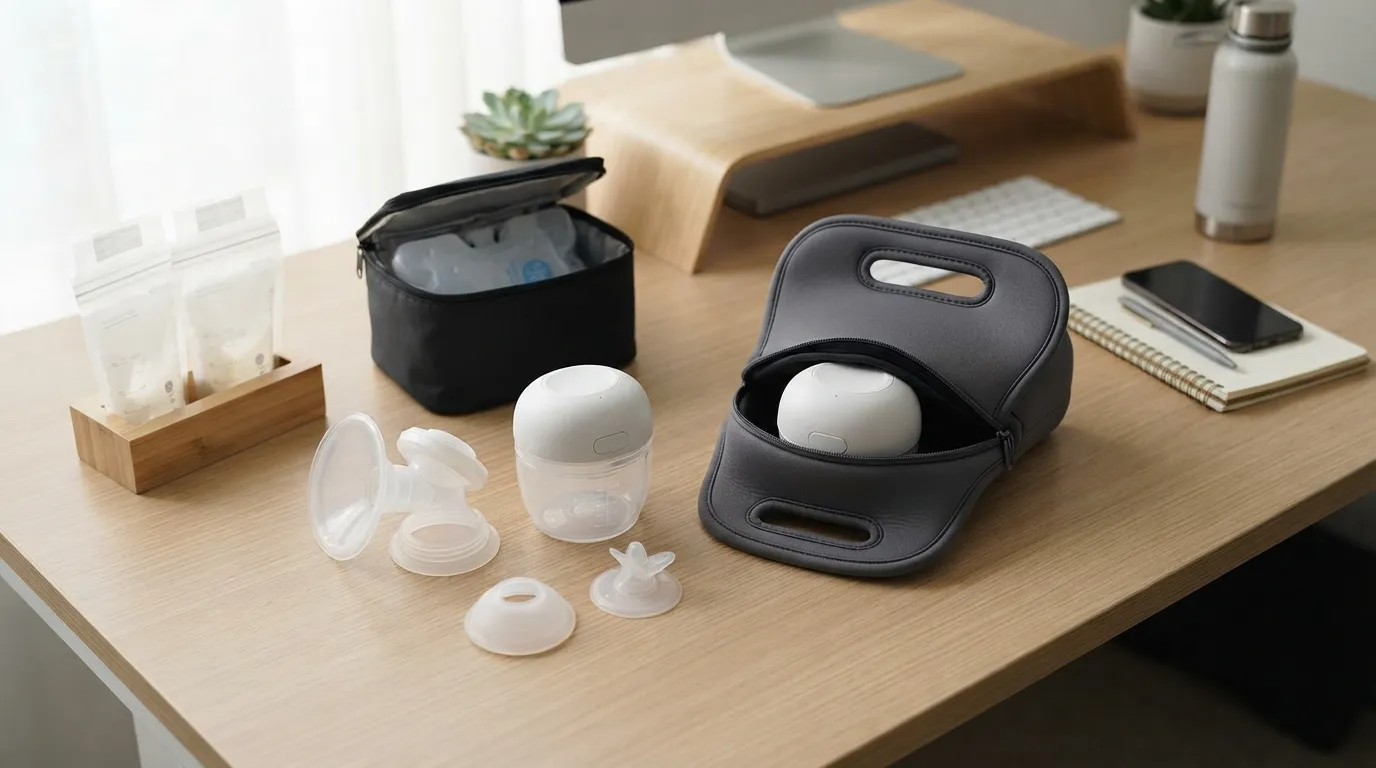
Start with your daily schedule rather than the pump’s most impressive-sounding feature. A parent who pumps twice in a private office has different priorities from someone who commutes by train, works in an open-plan space, or moves between locations throughout the day.
Think through each pumping session:
- Where will you use the pump?
- How much time will you have to position it?
- Can you sit somewhere private if needed?
- Will you need to carry expressed milk immediately afterward?
- Can you charge the pump during the workday?
- What clothing and bra styles do you normally wear?
For a private office, moderate noise may be acceptable if the pump is comfortable and efficient for your routine. In a shared workspace, a quieter operating sound may be more important than advanced controls.
Fit under clothing also requires realistic expectations. A wearable pump sits inside or against the bra, so it may be more visible than a compact manual pump or external motor with tubing. The shape of the pump, the bra’s support, and the cut of your clothing all affect how discreet it feels.
A supportive nursing or pumping bra can make placement easier, but very tight clothing may press against the collection area or change the seal. Test the pump at home with the clothes you expect to wear at work. Walk, sit, bend slightly, and remove it slowly to see whether it stays comfortably positioned.
Sizing is another essential consideration. Breast and nipple dimensions vary, and an unsuitable flange fit can affect comfort and milk removal. Review the manufacturer’s fitting guidance rather than assuming the standard part will suit you. If pumping is painful or output changes noticeably after switching equipment, consider asking a lactation professional for individualized advice.
Value, price, and total cost
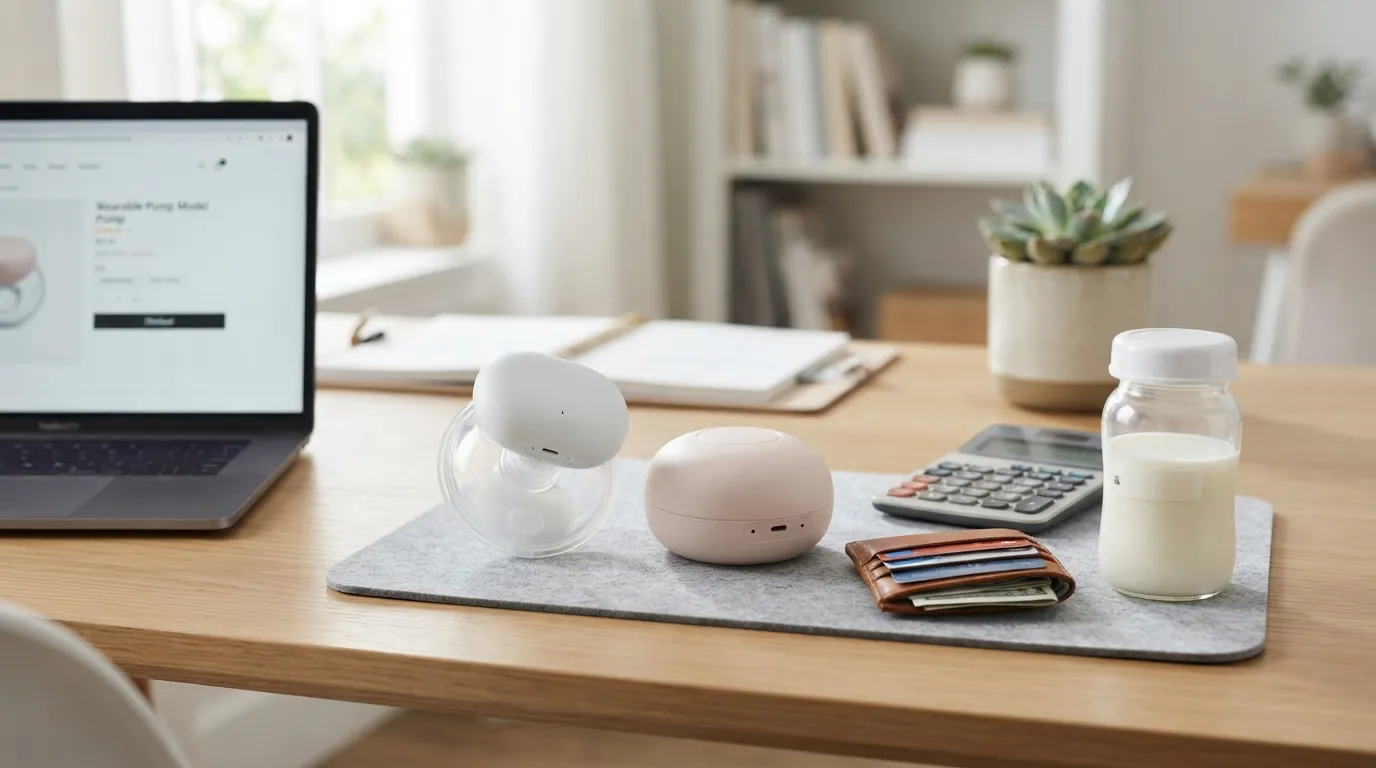
The purchase price is only one part of the cost of wearable breast pumps. Include the practical expenses and time involved in keeping the system ready for work.
Consider:
- Replacement collection or pumping parts
- Extra containers for transporting milk
- A cooler or insulated storage solution
- Cleaning supplies
- A spare charging cable or power source, where appropriate
- Time spent washing and drying components
- The cost of keeping a second setup for home and work
A lower-priced pump may be good value if it fits well, meets your noise requirements, and is simple to clean. A more expensive option may be worthwhile if it solves a specific problem in your day, such as limited access to outlets or the need to move around during pumping sessions. Price alone does not establish which option will work best for you.
A wearable electric breast pump can also reduce the inconvenience of carrying a larger setup, but portability has tradeoffs. Smaller components can be easier to misplace, and limited capacity may mean emptying the container more often.
Before buying, write down the features you will use at nearly every session. Prioritize those over occasional conveniences. If adjustable suction, reliable positioning, and straightforward cleaning matter every day, they should receive more weight than an app you may rarely open.
You can also browse breast milk storage solutions from Olivia by Lolafo if storage and transport are part of your office setup. Confirm product details, compatibility, and care instructions before purchasing accessories.
Features that actually change the experience
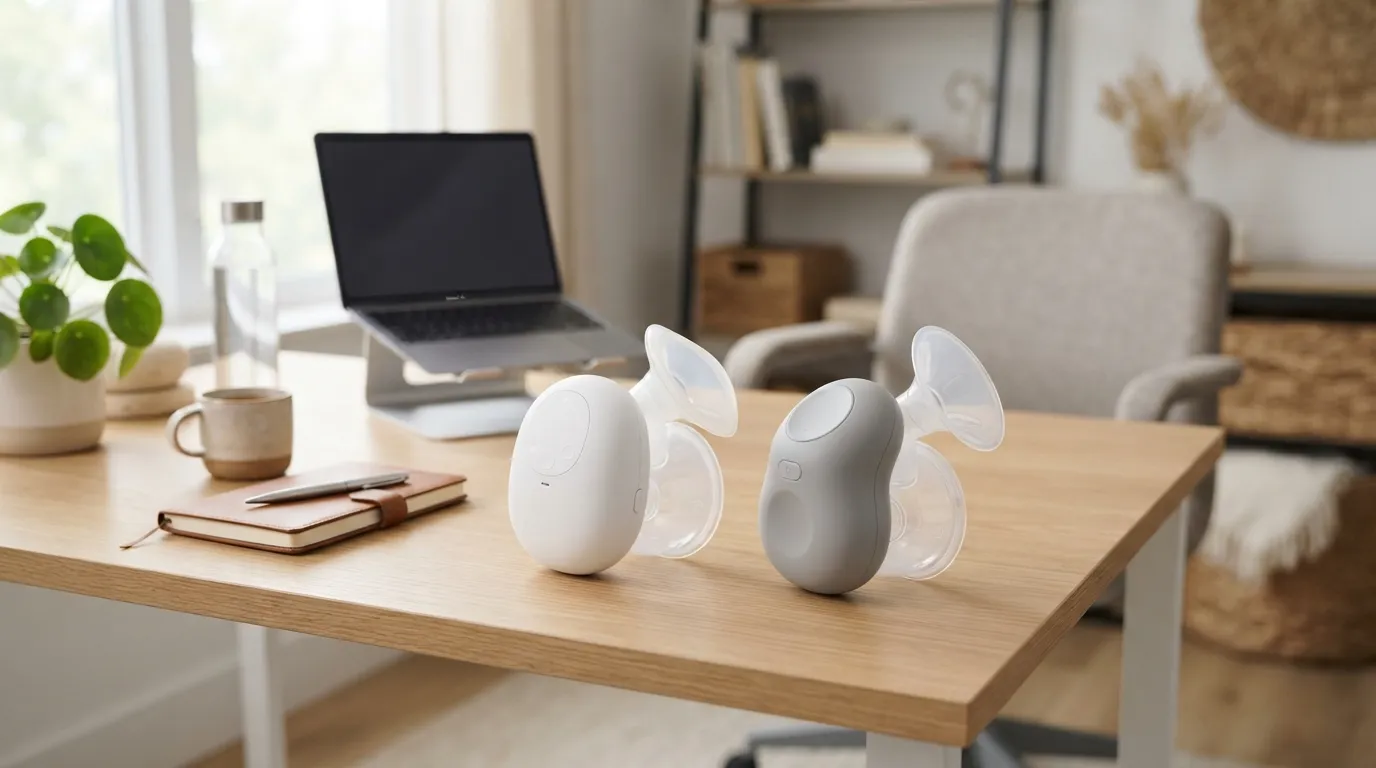
Not every feature has equal value for office pumping. The following details can affect comfort and reliability more directly than app-based extras.
Adjustable suction and control
Adjustable suction is one of the most important features to assess. Your comfortable setting may change depending on the session, your sensitivity, or how long you have been pumping.
More suction is not necessarily better. Excessive suction can be uncomfortable and may make it harder to continue a consistent routine. Look for controls that are easy to change without removing the pump or opening an app.
If the pump includes different modes, make sure you understand how to switch between them. Simple, accessible controls are especially useful when you are working under time pressure.
Noise
Pump noise can affect where you feel comfortable using it. Ask whether the product information provides a clear description or recording of operating sound, and read independent user feedback cautiously rather than relying on a vague “quiet” label.
Noise may be less noticeable in a private room than in a quiet conference room. If you plan to pump during calls, remember that microphone technology and the distance between the pump and your device can change how sound is perceived.
Clothing compatibility
Consider the bras and tops already in your wardrobe. A pump that requires a particular level of support may be inconvenient if you usually wear soft bras or loose layers. Conversely, very compressive clothing may affect comfort and positioning.
Try the pump with a full work outfit before relying on it at the office. Check whether you can place it correctly without assistance and whether you can remove it without disturbing clothing or spilling milk.
Battery and charging
Battery life should be evaluated against your actual number of sessions, not a general promise of portability. Count the sessions you need during a typical workday, then plan for delays, forgotten charging, and longer commutes.
A charging routine can help:
- Charge after cleaning or at the same time each evening.
- Carry the correct cable in your work bag.
- Keep a backup plan for a low-battery day.
- Avoid assuming a phone charger will work unless compatibility is confirmed.
- Check whether both pump units need charging separately.
A portable breast pump is only convenient when it is ready to use. Battery planning is therefore part of the purchase decision, not an afterthought.
Leak prevention and handling
Leak risk can be influenced by fit, posture, movement, fill level, seal, and how the pump is removed. No pump can eliminate the need for careful handling.
Before using it at work, practice:
- Checking that the flange is centered.
- Confirming the seal before starting.
- Sitting upright during the session.
- Monitoring the container as it fills.
- Ending the session before the container reaches its limit.
- Breaking the seal before removing the pump.
- Keeping a spare top or nursing pad in your bag.
A small wet bag can separate used parts from clean items until you can wash them properly.
Tradeoffs and limitations to check first

Wearable breast pumps offer convenience, but they are not a universal replacement for every pumping situation. Their compact design may limit capacity, controls, or visibility during a session.
Potential tradeoffs include:
- A less open view of nipple placement
- More parts to clean than a manual pump
- A fit that varies with bra style and breast shape
- Noise that is acceptable in one workplace but distracting in another
- Limited battery flexibility on long days
- Greater spill risk if the pump shifts or is overfilled
- Difficulty using the pump discreetly with certain outfits
- A learning curve for placement and removal
Some parents may also find that a wearable pump does not remove milk as effectively for them as another type of pump. Output can vary based on fit, settings, timing, breast anatomy, and individual response. If maintaining supply is a concern, avoid changing your regular pumping plan solely because a wearable model is convenient.
A wearable pump may be a weaker fit if you need to watch milk flow closely, require a very specific flange configuration, or have little time to clean and dry parts between sessions. It may also be unsuitable for activities involving substantial movement, bending, or pressure against the collection area.
Read the care instructions before purchase. A pump that is easy to use but difficult to clean may become frustrating during a demanding workweek. Look for clear guidance on disassembly, washing, drying, and which components must remain dry.
How to make the right wearable breast pumps decision
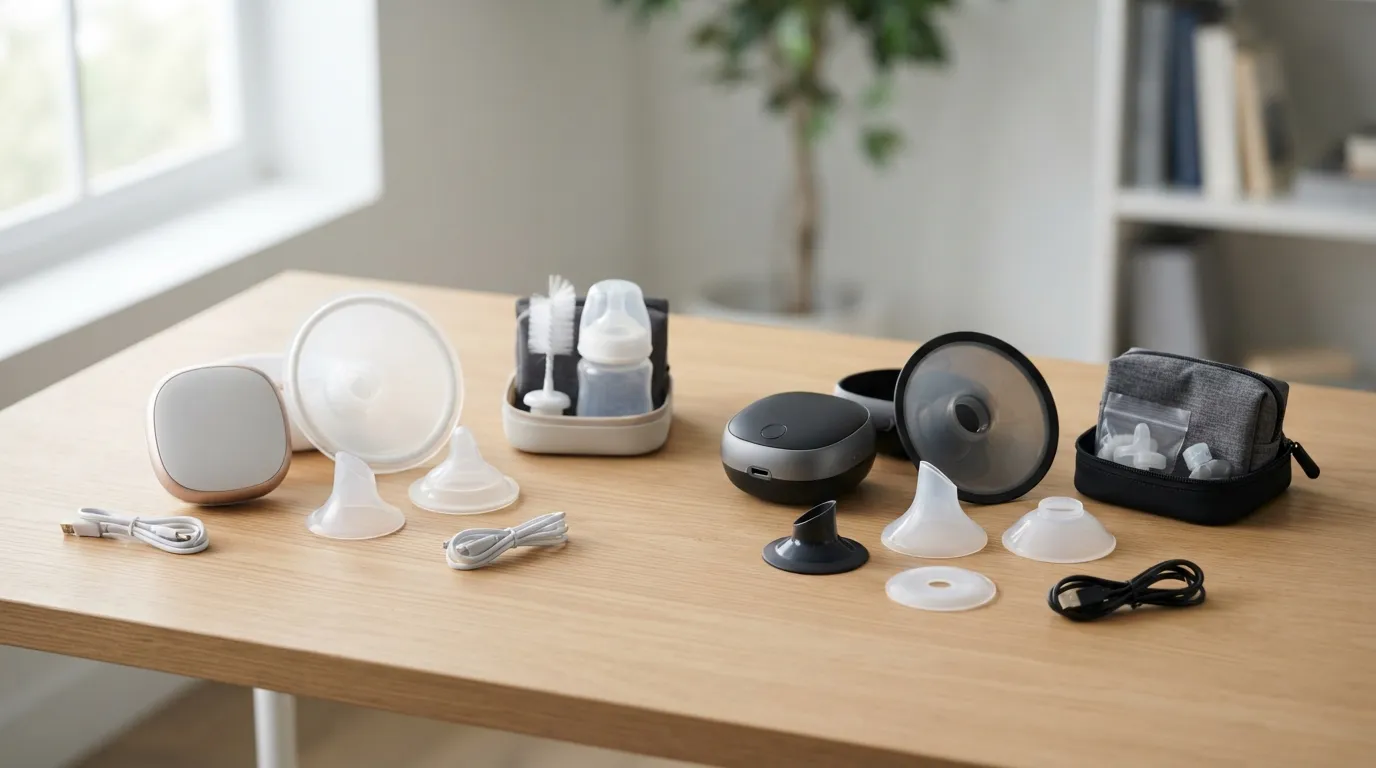
Use a simple decision process instead of comparing every available feature.
Step 1: Define the job
Decide whether you need a primary pump, a backup, or an office-specific option. If you already have a pump that works well at home, a wearable model may only need to make commuting and workplace sessions easier.
Step 2: Rank your top three criteria
Choose the three factors that could make you stop using the pump. For many office-based parents, these may be:
- Comfortable fit
- Low operating noise
- Reliable battery and leak control
If your highest priority is adjustable suction, place it above app connectivity. If you have limited private space, place discretion and noise first.
Step 3: Check compatibility before buying
Review sizing, clothing requirements, cleaning instructions, charging arrangements, and return terms. Confirm that the pump’s design suits your normal bra wardrobe and that replacement parts are available through the relevant seller or manufacturer information.
Step 4: Test the routine at home
Do not wait until your first day back at work. Practice a full session, including charging, assembly, positioning, removal, milk transfer, and cleaning. Time the process so you know how it fits into a short break.
Step 5: Build a work bag system
Keep clean parts in a separate container and bring storage supplies, nursing pads, a small towel, and a way to keep used parts contained. If refrigeration is not consistently available, plan milk storage according to current medical and workplace guidance.
Step 6: Reassess comfort and output
A successful office pump is one you can use consistently and comfortably. If you experience persistent pain, skin irritation, or a concerning change in milk removal, stop and seek guidance from a qualified lactation or healthcare professional.
FAQ about wearable breast pumps
Do wearable breast pumps actually work?
Wearable breast pumps can work well for some parents, particularly when fit, suction settings, and positioning are appropriate. Results vary, so test one before relying on it for every workday session.
What is the best wearable breast pump?
The best wearable breast pump is the one that matches your fit, comfort, noise, battery, cleaning, and milk-storage needs. Prioritize the criteria that affect your daily routine over extra features.
Which brand wearable breast pump is best?
No single brand is best for every parent. Compare Olivia by Lolafo and other available options by checking fit guidance, controls, care requirements, warranty terms, and suitability for your workplace.
Can I get a free wearable breast pump through my insurance?
Coverage depends on your insurer, location, plan, eligibility, and the equipment suppliers it recognizes. Contact your insurer directly to ask whether a wearable breast pump is covered and under what conditions.
Do wearable breast pumps decrease milk supply?
Wearable breast pumps do not automatically decrease milk supply, but ineffective milk removal, poor fit, or replacing needed sessions can affect an individual routine. Seek professional advice if supply changes concern you.
What should readers know first about wearable breast pumps?
Convenience does not replace fit and effective milk removal. Before buying, check sizing, suction control, noise, battery needs, cleaning, leak prevention, and whether the pump suits your planned sessions.
How do you choose the right wearable breast pumps approach?
Choose based on where and how often you pump, how discreet the setup must be, and which features protect comfort and consistency. A hands free breast pump may complement rather than replace another pump.
What mistakes should you avoid with wearable breast pumps?
Avoid skipping fit checks, using maximum suction automatically, overfilling containers, forgetting battery planning, and testing the pump for the first time at work. Practice the complete routine at home.
Recommended next steps
Begin by writing down your office pumping conditions: number of sessions, available privacy, commute length, charging access, clothing preferences, and milk-storage plan. Then rank noise, fit, adjustable suction, battery readiness, leak control, and cleaning according to your needs.
Review the Olivia by Lolafo nursing and pumping essentials, compare relevant product information carefully, and confirm sizing and care instructions before ordering. You can also revisit the wearable breast pump selection guide when planning your work bag and pumping routine.
The most useful choice is not necessarily the one with the longest feature list. It is the wearable electric breast pump or portable breast pump that you can position comfortably, use consistently, clean reliably, and carry through a real working day.
Meredith Calloway spent four years as a lactation support writer and product researcher before joining the Olivia by Lolafo editorial team, where she covers pumping gear, milk storage, and the unglamorous logistics of feeding a baby in the real world. She approaches every review and how-to the way she’d explain it to a friend texting from a parking lot — with specific numbers, honest trade-offs, and zero filler. Her work draws on published lactation research, hands-on product testing, and direct input from pumping communities including r/ExclusivelyPumping and IBCLC-reviewed sources. If a suction spec matters or a flange fit issue is being undersold by a brand, she’ll say so.
Leave a Reply